
Uncategorized · Younihao Insights
How I Choose a Reliable Pet Products Supplier in China: A Buyer’s Guide
BUYER’S GUIDE / PET PRODUCT SOURCING / OEM & ODM
From 50 potential factories to 1–2 dependable manufacturing partners: the supplier selection process I would use as a European pet products buyer.
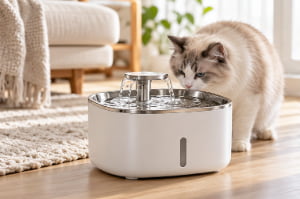
Imagine I am the purchasing director of a pet products wholesaler based in France. My company supplies pet retail chains, independent brands and online retailers across Europe. We are preparing to source a new range of automatic pet water fountains from China, including stainless steel models and potential private label pet water fountains.
My job is not simply to find the lowest quotation. I need a manufacturer capable of consistent product quality, reliable lead times, clear communication, relevant EU compliance documentation and long-term replacement-parts support.
My sourcing rule: The cheapest factory is not always the most cost-effective supplier. I select partners based on verified capabilities and the total cost of working together.
In this buyer’s guide
- 1. My Supplier Selection Process: From 50 Factories to 1–2 Partners
- 2. Where I Look for Pet Products Manufacturers in China
- 3. My Six-Point Website Screening Checklist
- 4. How I Verify a Manufacturer’s Factory and Quality Capabilities
- 5. What I Ask Before Requesting a Formal OEM/ODM Quotation
- 6. How I Test Pet Water Fountain Samples
- 7. EU Compliance: What I Check Before Importing
- 8. Private Label and OEM/ODM: What a Capable Supplier Should Explain
- 9. My 100-Point Supplier Evaluation Scorecard
- 10. Why I Start With a Trial Order Before Long-Term Supply
- 11. Red Flags That Make Me Reject a Supplier
- 12. What Makes a Reliable Long-Term Manufacturing Partner?
- Frequently Asked Questions About Sourcing Pet Products From China
1. My Supplier Selection Process: From 50 Factories to 1–2 Partners
I use a five-stage funnel so that only qualified candidates receive extensive sampling and audit resources. The numbers below illustrate a sourcing project, not a universal industry benchmark.
| Stage | Suppliers | Decision |
|---|---|---|
| Initial search | 50 | Collect manufacturers and exporters from several channels. |
| Website screening | 20 | Check product fit, company identity and evidence of manufacturing. |
| Document and RFQ review | 8 | Compare factory details, certifications, MOQ, pricing and responsiveness. |
| Samples and final audit | 3 | Test actual products and verify key production processes. |
| Approved supplier list | 1–2 | Place pilot orders and build long-term supply plans. |
This process helps me avoid spending weeks evaluating suppliers that cannot deliver the required product specification or market documentation. I keep written evidence at every stage rather than relying on memory or sales promises.
2. Where I Look for Pet Products Manufacturers in China
When searching for a pet products supplier in China, I do not rely on one marketplace. I compare independent factory websites, B2B platforms, professional networks and trade exhibitions.
The Google search terms I actually use
- pet water fountain manufacturer China
- automatic pet water fountain OEM ODM factory
- private label pet water fountain manufacturer
- pet water fountain wholesale supplier
- stainless steel cat water fountain manufacturer
- pet products manufacturer China
- custom pet water fountain supplier for European brands
| Channel | Why I Use It | What I Verify |
|---|---|---|
| Google and factory websites | Find manufacturers beyond marketplace listings. | Products, company information, factory proof and technical content. |
| Alibaba International | Compare a broad range of supplier offers. | MOQ, customization claims, model options and communication. |
| Made-in-China / Global Sources | Cross-check industrial and export listings. | Company profiles, product range and supporting documentation. |
| Understand the business behind the website. | Company presence, team and contact consistency. | |
| Industry trade shows | Meet teams and inspect product samples. | Build quality, technical knowledge and factory follow-up. |
A high Google ranking can help me discover a factory. It does not prove that the business is a qualified manufacturer. The supplier must still pass the same checks as everyone else.
3. My Six-Point Website Screening Checklist
Before sending an RFQ, I spend time on the supplier’s official website. A well-designed website is useful, but the evidence behind it matters more than the design.
1. Homepage: Is the company clear about what it does?
I look for consistent positioning as a pet product manufacturer, a genuine company address, the main product categories and a straightforward explanation of OEM/ODM services.
2. Product pages: Can I compare real specifications?
For an automatic cat water fountain I expect water capacity, dimensions, materials, input voltage, rated power, pump information, filtration structure, net and gross weights, carton dimensions and available packaging options.
3. About page: Can manufacturing claims be verified?
I look for real production footage, assembly processes, quality control activities, engineering capabilities and an identifiable production location. A factory-size claim is useful only when it can be corroborated.
4. Quality and compliance: Do reports match the exact model?
A row of CE or RoHS logos is not enough. I want the applicable standards, complete reports, product model numbers, issue dates and the relevant EU Declaration of Conformity where required.
5. OEM/ODM services: What can actually be customized?
I want to know whether the supplier supports logo printing, retail packaging, color options, multilingual manuals and product development—and which changes require tooling.
6. Contact page: Can I reach a responsible person?
Real company details, consistent email domains, a commercial contact and access to technical support all improve the credibility of the supplier.
A professional website can earn a place on my shortlist. It cannot replace a factory audit or sample testing.
4. How I Verify a Manufacturer’s Factory and Quality Capabilities
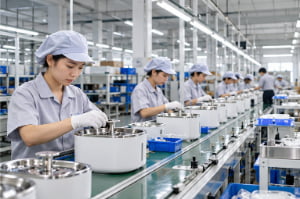
Once I have around 20 candidates, I ask for evidence that separates a trading company, an integrated manufacturer and a business that outsources most of its production. None of these models is automatically unacceptable, but I must understand who is responsible for manufacturing and quality.
| What I Verify | Evidence I Request |
|---|---|
| Legal entity and factory identity | Business registration, legal company name, manufacturing address and commercial contracting entity. |
| Production capability | Assembly-line videos, equipment lists, stated capacity and a live factory walkthrough. |
| Quality management | Incoming quality control (IQC), in-process inspection (IPQC), outgoing quality control (OQC) and corrective-action examples. |
| Product development | Engineering contact, drawing control, sampling process and documented design changes. |
| Supply chain stability | Pump and filter sourcing plans, critical-component alternatives and inventory practices. |
| Export readiness | Export packaging experience, batch traceability, inspection reports and shipping documents. |
If I cannot visit the factory in person, I arrange a live video audit or an independent third-party inspection. I also compare the manufacturer name on test documents with the company that will actually fulfill my order.
5. What I Ask Before Requesting a Formal OEM/ODM Quotation
A quotation without a shared specification can be misleading. One factory may quote a basic plastic unit, while another prices a stainless steel fountain with improved packaging and additional quality checks. I first create an apples-to-apples RFQ (Request for Quotation).
My pet water fountain RFQ checklist
- Product: model, water capacity, housing material, pump type, power supply and filter design.
- Packaging: retail box, protective insert, shipping carton, barcodes and multilingual instructions.
- Customization: logo method, colors, printed artwork, packaging and any ODM changes.
- Pricing: unit price at several order quantities, tooling or setup fees, replacement-filter pricing and quotation validity.
- Order details: MOQ, sample cost, sample lead time, mass-production lead time and production capacity.
- Commercial terms: Incoterms such as EXW or FOB, payment conditions and inspection responsibilities.
- Documentation: model-specific test reports, conformity records, traceability plan and destination-market information.
I also ask who supplies replacement filters and pumps, because these consumables can determine whether a pet water fountain range remains commercially viable after the initial sale.
6. How I Test Pet Water Fountain Samples
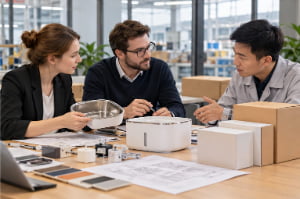
A sample is the first real test of the supplier’s promises. I normally compare several samples under the same conditions and retain an approved golden sample for production reference.
The sample tests I prioritize
- Water leakage: tank joints, pump connections, movement and normal operating conditions.
- Pump operation: stability, flow performance, restart behavior and performance after extended running.
- Noise: audible pump and water-flow noise under consistent test conditions.
- Materials and finish: part quality, sharp edges, assembly fit, surface finish and supplier material declarations.
- Cleaning and maintenance: whether customers can remove, wash and reassemble the filter and water-contact components.
- Consumable compatibility: filter dimensions, water pump replacements and parts availability.
- Packaging durability: protection during shipping, cartons, accessories and instruction accuracy.
For a waterproofing or endurance claim, I require an agreed procedure and acceptance criteria instead of accepting a vague “passed 24-hour test” statement. I repeat critical checks on a production batch, not just a showroom sample.
7. EU Compliance: What I Check Before Importing
For a French distributor sourcing from China, the manufacturer’s ability to support EU pet product compliance is part of supplier qualification. The exact legal requirements depend on the full product configuration, power supply, wireless features, materials and destination country.
| EU Topic | What I Check as a Buyer |
|---|---|
| CE marking | Whether specific EU harmonisation rules require CE marking for the exact product; where applicable, technical documentation and an EU Declaration of Conformity. |
| EMC and electrical safety | Applicable electromagnetic compatibility rules and electrical safety obligations. The Low Voltage Directive applies only within defined voltage limits; a low-voltage fountain and its external adapter may need separate analysis. |
| RoHS and REACH | Applicable restrictions on substances in electrical equipment and relevant chemicals and material obligations. |
| RED for wireless models | Additional assessment where the product contains Wi-Fi, Bluetooth or other radio functions; check current rules for the proposed placing-on-market date. |
| WEEE / national EPR | Waste electrical and electronic equipment obligations, including country-specific registration and producer-responsibility arrangements. |
| GPSR and traceability | Relevant general product safety duties, batch identification, product warnings, economic-operator information and recall readiness, as applicable. |
Important: CE is not a universal “quality certificate” for every pet product. CE marking is required only where the applicable EU legislation calls for it. A non-electrical stainless steel litter box and an electronic water fountain must not be treated as if they have identical compliance requirements.
I ask the supplier to connect every report to the actual model and technical configuration being offered. I also confirm which responsibilities belong to the manufacturer, importer and brand owner. The EU General Product Safety Regulation (GPSR) has applied since 13 December 2024; buyers should review the most current official guidance before placing a product on the market.
For reference, I check official sources such as Your Europe’s CE marking guidance, the EUR-Lex GPSR summary and the European Commission’s Low Voltage Directive guidance. This checklist is not a substitute for product-specific compliance advice.
8. Private Label and OEM/ODM: What a Capable Supplier Should Explain
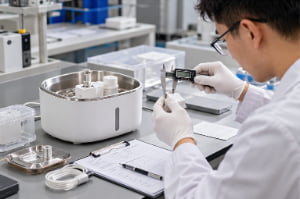
For a brand owner, private label pet products involve more than printing a logo. I need a manufacturer that can manage artwork, specifications, packaging approvals and product changes without losing control of the production process.
Questions I ask an OEM/ODM pet products factory
- Branding: Which logo methods are available, and what is the minimum quantity for each?
- Packaging: Can you produce retail color boxes, kraft boxes, barcode labels and multilingual instructions?
- Colors and materials: Which colors and material options are already in production, and which require special procurement?
- ODM engineering: Can your team evaluate technical drawings, prototypes, tooling and design-for-manufacture changes?
- MOQ: Is the minimum order quantity different for a standard model, private label packaging and a new mold?
- Design ownership: Who owns custom tooling, artwork and development files, and what does the contract permit?
The best answer is a detailed specification and quotation—not a generic promise that “everything can be customized.” A dependable OEM/ODM pet products manufacturer should make the boundaries of each service clear.
9. My 100-Point Supplier Evaluation Scorecard
After verifying the documents and samples, I use the following weighted scorecard to compare candidates. The weights represent an example for a European electric pet fountain project and should be adjusted for the actual product category.
| Criteria | Weight | Evidence |
|---|---|---|
| Manufacturing credibility | 15 points | Factory identity, on-site verification and production visibility. |
| Sample quality and QC | 20 points | Test results, inspection procedures and consistency. |
| EU compliance support | 20 points | Model-level documentation, traceability and accurate explanations. |
| OEM/ODM capability | 15 points | Engineering support, customization scope and project control. |
| Delivery and supply stability | 15 points | Capacity, lead time, components and risk planning. |
| Total landed/ownership cost | 10 points | Price, freight, consumables, quality losses and service costs. |
| Communication and after-sales | 5 points | Clear answers, response quality and corrective-action process. |
| Total | 100 points | Selection aid, not a substitute for critical-risk checks. |
I apply a pass/fail gate for severe safety risks, falsified reports, unverifiable supplier identity or refusal to provide essential traceability. A high overall score cannot offset these problems.
10. Why I Start With a Trial Order Before Long-Term Supply
Before converting a supplier into a long-term partner, I run a pilot order. This helps me evaluate the actual production lot, packaging, communication, inspection cooperation and logistics performance.
- Approve the golden sample: lock the critical specification, packaging and approved material choices.
- Agree on AQL and defect definitions: classify critical, major and minor defects and document the sampling plan.
- Review production lead time: track order confirmation, material readiness, assembly, inspection and shipment.
- Inspect the shipment: consider a pre-shipment inspection by the buyer or an independent inspection company.
- Track corrective actions: require root-cause analysis and prevention plans for any relevant problems.
- Plan after-sales supply: document filter and pump availability, warranty handling and replacement lead times.
I may retain a second approved supplier for continuity. For repeat business, predictable production and transparent problem-solving matter more than one unusually low introductory price.
11. Red Flags That Make Me Reject a Supplier
- The company cannot confirm who actually manufactures the product.
- Test reports cannot be matched to the quoted model or configuration.
- The sample is good, but specifications or materials change without approval.
- The sales team avoids questions about replacement filters, pumps or warranty claims.
- MOQ, delivery time and packaging requirements change repeatedly without explanation.
- The supplier refuses reasonable factory verification or inspection conditions.
- The quoted price is attractive only because important costs or product requirements are excluded.
These signals do not always prove misconduct, but they are reasons to pause procurement until the supplier provides a satisfactory explanation and supporting evidence.
12. What Makes a Reliable Long-Term Manufacturing Partner?
A reliable pet water fountain manufacturer in China should help me reduce risk across the entire purchasing cycle: product development, procurement, manufacturing, conformity assessment, shipping and after-sales service.
For me, the winning supplier is not necessarily the one with the most impressive website or the lowest unit price. It is the company that can demonstrate manufacturing control, communicate clearly and deliver the same agreed quality from the first sample to the fiftieth shipment.
My final purchasing principle: Choose a supplier you can verify, a specification you can measure and a process you can repeat.
Frequently Asked Questions About Sourcing Pet Products From China
How do I find a reliable pet products supplier in China?
Start with Google searches, trade platforms and exhibitions. Shortlist suppliers whose products fit your market, then verify their business entity, actual factory, sampling capability, export documentation, quality process and delivery record.
What should I ask a pet water fountain manufacturer before ordering?
Ask for complete technical specifications, MOQ, OEM/ODM options, sample and production lead times, packaging details, replacement-filter availability, quality standards and model-specific compliance documents.
Can I order private label pet water fountains with a low MOQ?
Some factories offer lower MOQs for standard products with simple logo or packaging changes. Customized colors, components, new tooling or packaging structures may require higher quantities. Request separate pricing for each option.
What EU requirements apply to automatic pet water fountains?
Assess the actual model and its power and wireless configuration against applicable CE-related rules, EMC, RoHS, relevant LVD or RED requirements, REACH, WEEE and general product safety duties where applicable. Do not rely on a generic certificate list.
Should I buy directly from a pet products factory or a trading company?
Either arrangement can work. What matters is clarity about the legal seller, the real manufacturer, ownership of the quality process and who is accountable for technical documentation, defects and after-sales support.
What is the difference between OEM and ODM pet products?
OEM usually means manufacturing a product to an agreed specification or under a customer brand. ODM typically adds design or development support. The actual scope, tooling rights and ownership should be documented in the contract.
Exploring an OEM/ODM Pet Products Manufacturing Partner?
Youniha works with pet brands, importers and wholesalers on product sourcing and customization projects, including pet water fountains, automatic feeders and litter care products. Share your target market, required product specifications and estimated order quantity to start a practical discussion.
Editorial note: This article describes an illustrative purchasing scenario rather than a claim about any one buyer’s historical transactions. All four images are AI-generated concept illustrations and do not document real audits, employees or products.
Leave a Reply